

Dressed to Stand: Putting on the Armour of God

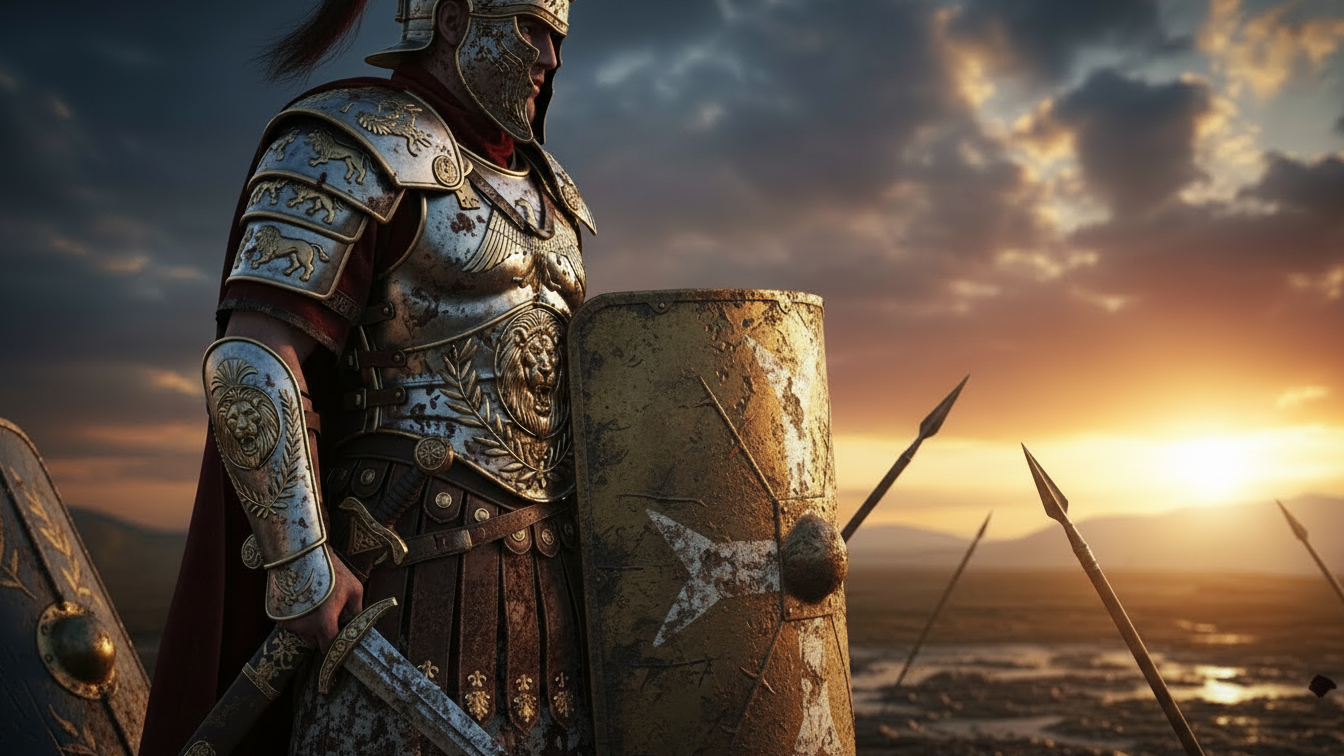
Ephesians 6:10–18 (KJV)
10 Finally, my brethren, be strong in the Lord, and in the power of his might.
11 Put on the whole armour of God, that ye may be able to stand against the wiles of the devil.
12 For we wrestle not against flesh and blood, but against principalities, against powers, against the rulers of the darkness of this world, against spiritual wickedness in high places.
13 Wherefore take unto you the whole armour of God, that ye may be able to withstand in the evil day, and having done all, to stand.
14 Stand therefore, having your loins girt about with truth, and having on the breastplate of righteousness;
15 And your feet shod with the preparation of the gospel of peace;
16 Above all, taking the shield of faith, wherewith ye shall be able to quench all the fiery darts of the wicked.
17 And take the helmet of salvation, and the sword of the Spirit, which is the word of God:
18 Praying always with all prayer and supplication in the Spirit, and watching thereunto with all perseverance and supplication for all saints
Ephesians 6 serves as the conclusion of Paul’s letter to the church in Ephesus. It brings closure to the theological truths laid out in chapters 1–3 and transitions into a call to live those truths out in everyday life in chapters 4–6, as people united in one Spirit with Christ as the head. As Paul opens this final section in Ephesians 6:10, he does so with the word finally, which functions as a hinge. He is gathering everything he has already said about identity, unity, submission, obedience, and life in Christ and pressing it into one final charge. In light of all that has been revealed, this is how believers are meant to stand, having taken on their new identity found in Christ.
Paul begins his conclusion by emphasizing the need for strength, and he is careful to define its source. “Be strong in the Lord and in the power of His might.” This serves as a redirection away from the human tendencies of self-sufficiency. It is a reminder that strength is not summoned from within but drawn from the Lord. Only after establishing this does Paul introduce the action of putting on the armour of God.
The call to “put on the whole armour of God” is intentional and active. The verb “put on” implies conscious effort and personal responsibility. Armour is not automatically worn by virtue of being a believer; it must be taken up deliberately. The armour is meant to be worn, adjusted, and fastened with awareness. Paul makes it clear that spiritual readiness requires intentionality and choice. One either chooses to be clothed, or remains exposed.
Another key message is Paul’s use of the phrase whole armour, which makes clear that he is not describing partial coverage or selective obedience. The Greek word panoplia refers to a complete suit of armour, fully assembled, with nothing missing. To put on the whole armour of God is to resist the temptation to choose what feels comfortable while neglecting what feels costly or weighty. A partially armoured soldier is a vulnerable soldier.
Paul then sheds light on why this full coverage is necessary, so that believers can stand against the wiles of the enemy. Wiles denote schemes, pointing to strategy, intention, and planning on the enemy’s end. The opposition which the believer faces is not random or reactive, but deliberate, well thought out, studied and crafty, which is why preparation cannot be casual. Awareness on the believer’s end is not optional, but an act of obedience.
At this point, Paul clarifies the true nature of the conflict. “For we wrestle not against flesh and blood.” The struggle believers face does not ultimately lie with people, systems, or visible opposition, as it may often appear, but is spiritual in nature. Paul names rulers, authorities, and powers of darkness not to overwhelm the reader, but to sharpen their understanding. Yes, there are ranks, extending as far as spiritual wickedness in high places, and this disclosure is not meant to instill fear, but to help believers correctly identify the enemy they are up against, and therefore understand the level of preparation and resistance required. As the battle is spiritual, the preparation must also be spiritual.
For this reason, Paul repeats the instruction to take up the whole armour of God, drawing from Isaiah 11:5, 49:2, 59:17 attributes of the Messianic King pointing to the need to be like Jesus. The repetition reinforces urgency. The day of evil will come, not as a possibility, but as a certainty, and when it does, physical strength and good intentions will not suffice. Paul frames the goal clearly: “Having done all, to stand.” Standing is not inactivity, but the outcome of faithful preparation. It is the evidence that the armour, once put on, has held in place.
When Paul begins describing the armour, he does so using imagery that would have been immediately familiar to the Ephesians. Roman soldiers were a daily fixture in their lives, standing guard in public spaces, patrolling streets, and stationed throughout cities and homes. Because of this, people understood how armour fit together and how dependent each piece was on the others. Paul uses what was familiar to his audience to explain the level of preparation required to confront the enemy he has already identified.
The Belt of Truth
The first piece Paul names is the belt of truth. In Roman armour, the belt served several crucial purposes. It secured the soldier’s tunic and breastplate, supported the weight of the sword and dagger, and protected the lower abdomen. The breastplate was often attached to the belt with straps. If the belt loosened, the breastplate could shift or fall away, movement would be restricted, and protection would ultimately fail, as everything depended on the belt holding firm.
Spiritually, truth functions in the same foundational way. This truth refers first to the truth of God revealed in the gospel, and also to the believer’s commitment to integrity. Jesus Himself is the truth, and without Him, the armour does not hold together. The enemy does not fight honorably. He targets exposed areas and exploits deception wherever it is found. Truth guards against these attacks. The belt also carries the sword, which reveals that without truth the believer remains defensive, never advancing. This is why girding oneself with truth is critical to preparation.
The Breastplate of Righteousness
From there, Paul moves to the breastplate of righteousness. Christian theology often describes righteousness as operating on two levels. There is positional righteousness, the righteousness of Christ credited to believers at salvation, which guards against condemnation and accusation, covering sin that our own works could never address. There is also practical righteousness, which reflects how that faith is lived out daily through obedience, integrity, and holiness. These two work together. Just as a breastplate protects the heart and lungs, righteousness protects the spiritual heart, the inner life where devotion, desire, and direction reside. A life of compromise leaves openings the enemy is quick to exploit, practicing righteousness closes these vulnerabilities.
Shoes of the Gospel of Peace
Paul then turns to the feet, fitted with the readiness that comes from the gospel of peace. Roman military sandals were designed for endurance, stability, and mobility. Hobnailed soles allowed soldiers to dig into rough or slippery terrain without losing footing, a critical advantage in close combat where a single misstep could be fatal, while ankle straps secured the sandals firmly so they would not come loose in battle, allowing soldiers to stand their ground and move quickly when needed.
In the same way, the gospel of peace provides grounding. It gives peace with God through Christ, anchoring the believer while also equipping them to move outward and spread the gospel. This aligns with the Great Commission. As soldiers of the Kingdom, we are not called to be stationary, but to move, just as soldiers in battle must advance and push forward. Bible translations use words such as preparation and readiness, which call attention to the need to be equipped and to have sure footing in the gospel we preach. Confidence in God’s peace allows believers to stand firm without stumbling, while also preparing them to carry good news forward. As Isaiah writes, “How beautiful on the mountains are the feet of the messenger who brings good news, the good news of peace and salvation, the news that the God of Israel reigns!” Isaiah 52:7 (NLT)
The Shield of Faith
The next piece Paul highlights is the shield of faith. The Roman shield was large and rectangular, often as tall as a door, constructed of wood and leather, and designed to provide coverage for nearly the entire body. These shields were sometimes treated and doused with water so they could extinguish flaming arrows, which were intended to ignite fear and destruction upon impact. Faith works in much the same way, as persistent trust in God’s promises extinguishes the enemy’s fiery lies before they are able to take root.
On the battlefield, Roman soldiers often stood shield to shield, forming a solid wall of protection. In the same way, faith carries a communal dimension, as believers are strengthened together. One person’s faith can steady another during moments of weakness, and community becomes a shared defense, a shield wall of encouragement, accountability, and perseverance. This serves as a reminder that the Christian journey is not meant to be walked alone, but alongside brothers and sisters in the faith as we encourage one another and advance toward the narrow gate.
The Helmet of Salvation
Paul then turns to the helmet of salvation. Roman helmets were carefully engineered to protect the skull, forehead, cheeks, and neck. In battle, the greatest threat to the head came from swords, axes, or projectiles, and a properly worn helmet could deflect such attacks. No soldier would willingly enter battle without a helmet, given how debilitating a head injury could be. In the same way, salvation, in the full biblical sense, covers our past, present, and future. We have been saved from the penalty of sin, are continually being saved from the power of sin, and will ultimately be saved from the consequences of sin. Just as a physical helmet protects the brain, the knowledge of our salvation protects the mind, which serves as the control center of the believer.
Assurance of salvation guards thoughts, anchors identity, and fuels confidence. It reminds the believer who they belong to when the enemy attempts to bring past and present failures to the forefront.
The gift of salvation protects against doubt about where we stand. It is the hope of our salvation, a sure expectation based on the finished work of Jesus Christ on the cross. For this reason, believers are able to take every thought captive, preach to themselves, encourage themselves in the Lord, and engage in battle without fear or deception, whether whispered quietly or screamed aloud, having donned the helmet of salvation.
The Sword of the Spirit
Paul concludes the armour with the sword of the Spirit, which is the Word of God. The Roman gladius was a short, double-edged weapon designed for close combat. It could cut in either direction and pierce armour at weak points with precision. Roman soldiers trained rigorously with it, learning to strike decisively once a battle closed in.
The Word of God functions in the same way. It is both defensive and offensive. When attacked, Scripture repels lies and temptation, as seen when Christ responded to Satan with, “It is written.” At the same time, the Word advances God’s kingdom. It cuts to the heart, exposes falsehood, and dismantles strongholds. Its power does not rest in human skill alone, but in the Spirit who wields it. A sword is only used effectively when the wielder is familiar with it and has trained with it. In the same way, to use Scripture effectively, believers must spend time reading, studying, and even memorizing the Bible so the Spirit can bring the right truths to mind in battle. A sword sitting idle in its sheath is of no use; likewise, a Bible that is never read or a verse never recalled does little in spiritual warfare. Having the sword as an extension of oneself is the foundation of sword fighting, or in this case, word fighting.
Prayer
Paul finally closes with prayer. Even here, the language remains active: praying always, watching with perseverance. Prayer is the posture that keeps the believer connected, alert, and responsive. Watching and praying sustain endurance. It is like the oil for the armour that keeps it moving. Prayer is the connection to the Father who orchestrates all things, who knows the end from the beginning, who knows all things, sees all things, and who has already declared that the victory has been won. For believers, praying always is essential to remaining connected and moving in the direction we are called to.
Taken together, Paul presents the Christian life not as passive spirituality, but as active faithfulness. Believers are called to stand with strength in the Lord when faced with relentless opposition that seeks destruction. The war has been won, but the battle is lived daily. As we “put on the full armour of God” and stand firm, we join the ranks of those faithful soldiers of Christ. Though the Roman armour is now put away and sits as relics of history in museums, the armour of God is not to be put away.
God has called His people to put on, to take up, to withstand.
And having done all, TO STAND.
[…] Soldiers, Shields Up […]